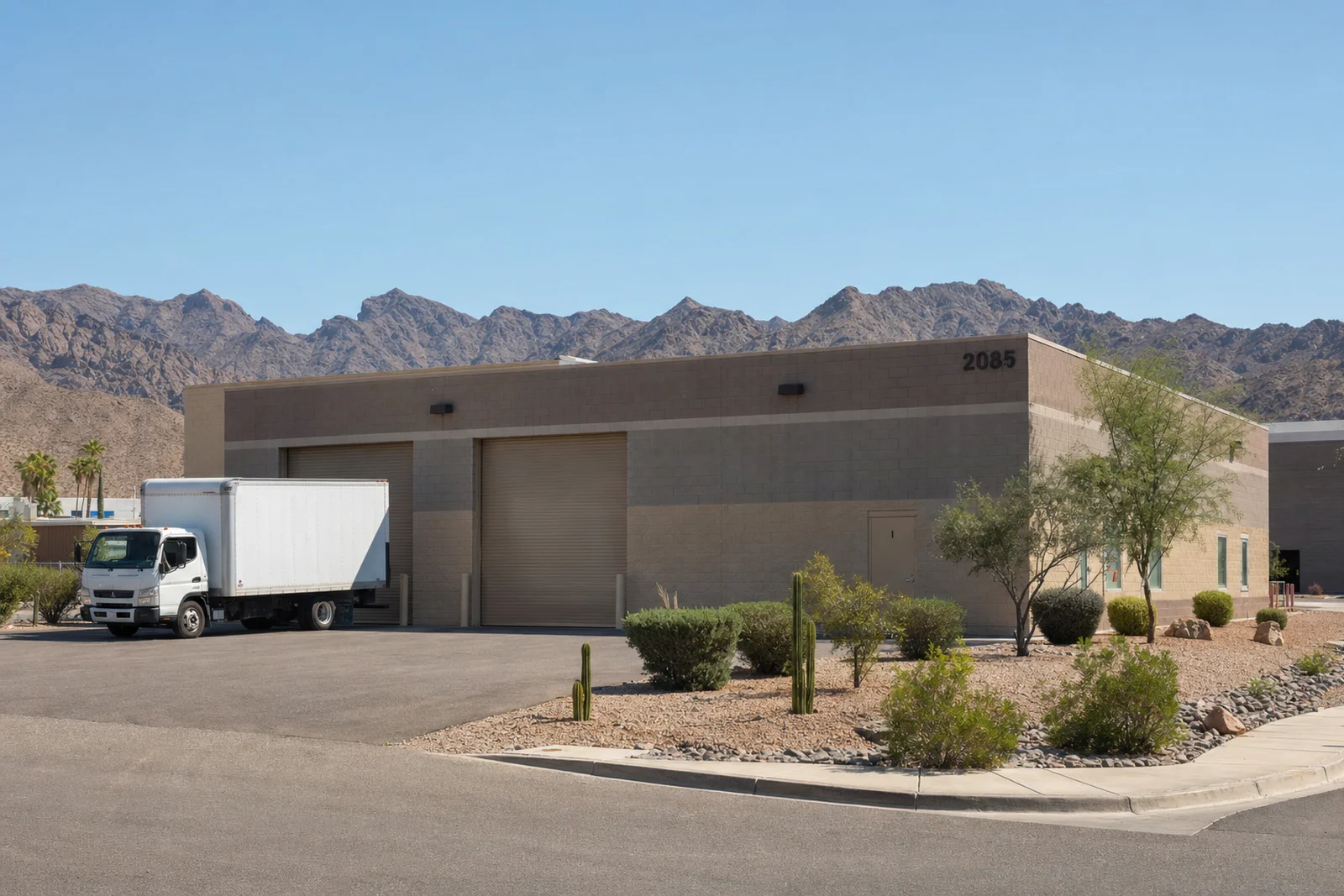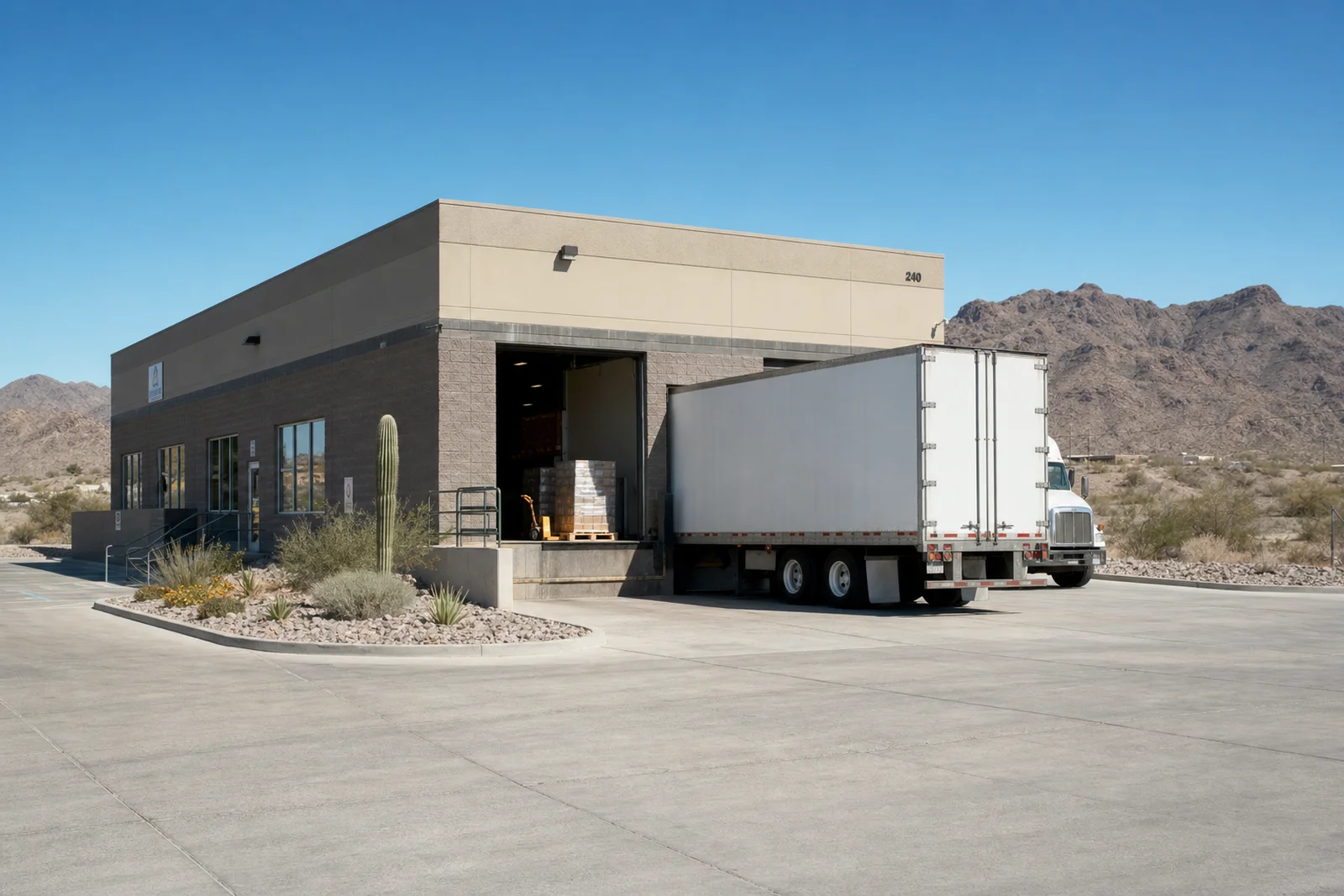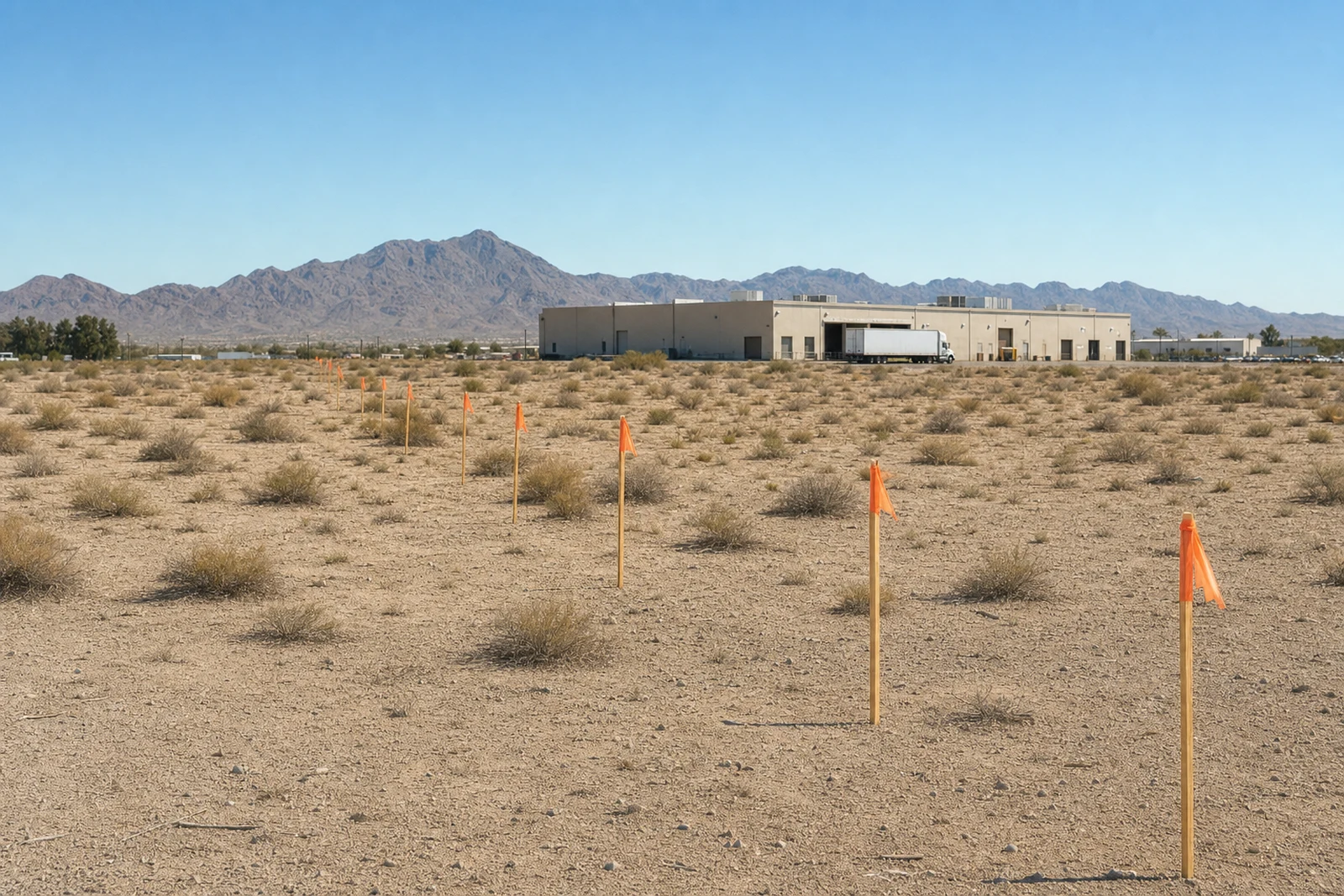
Lake Havasu City's industrial story keeps adding new chapters. The latest doesn't come with a groundbreaking ceremony or a press release, but it may be one of the more telling signals yet about where the market's industrial side is headed: a rezoning approval that changes what a piece of the city's northern corridor can become.
A 64-acre parcel gets the city's highest industrial zoning
A roughly 64-acre parcel north of the Shops at Lake Havasu recently received General Manufacturing (M2) zoning — the highest industrial classification in Lake Havasu City's zoning code — with a national tenant reportedly involved, though that tenant's identity hasn't been confirmed publicly (Lake Havasu City Commercial). It's the kind of approval that rarely makes local headlines, but investors and business owners who track zoning maps tend to notice what it signals about a corridor's direction.
Why this type of zoning is a bigger deal than it sounds
M2 General Manufacturing zoning generally permits heavy manufacturing, large-scale distribution, and industrial operations that lighter commercial or light-industrial zoning would typically exclude. This kind of designation has historically been scarce within Lake Havasu City itself, with most of the region's heavier industrial depth concentrated in Kingman and Bullhead City rather than Havasu, according to local commercial brokerage Lake Havasu City Commercial (Lake Havasu City Commercial). A rezoning at this scale can serve as a signal to other industrial users that a corridor is capable of supporting similar operations, which may draw additional tenant interest over time.
Land scarcity is shaping how — and where — this growth can happen
Lake Havasu City is effectively landlocked, and privately held, deed-clear commercial land in the northern corridor is limited, with much of the surrounding property controlled by the Arizona State Land Department (Lake Havasu City Commercial). Any release of that land for private development generally moves through a multi-year auction and entitlement process rather than a fast timeline. That suggests this rezoning may point to a direction for the market without necessarily compressing how quickly new large-scale supply becomes available.
Kingman offers a preview of what could follow
About 30 miles east, Kingman has already seen a similar pattern play out at a larger scale, with several large-format warehouse and manufacturing facilities completed or underway near the intersection of I-40 and the developing I-11 corridor, an area also highlighted for its rail access and industrial base (Business In Focus Magazine). Local commercial real estate commentary suggests that once industrial tenants of scale commit to a corridor, other businesses may be more likely to follow — though that kind of buildout tends to happen gradually rather than all at once (Lake Havasu City Commercial).
What this could mean if you're considering space here
For businesses weighing whether Lake Havasu City fits their footprint, this rezoning is one more data point suggesting the market's industrial side may continue to develop, even if new large-scale supply in the northern corridor remains a multi-year story rather than a near-term one. In the meantime, well-located existing flex and industrial space may continue to see steady interest from businesses that want a foothold in the area without waiting on the northern corridor's longer-term build-out.
Positioning matters in a market like this. Businesses that secure well-built, flexible space now may be better placed to grow alongside the region as this next chapter of industrial activity takes shape.
Exploring flex space in Lake Havasu City?
Lakeview Executive Lofts offers masonry-built industrial flex units from 3,900–20,000 SF with 20.5' clear height, all HVAC-conditioned, minutes from the lake.
Inquire About Availability